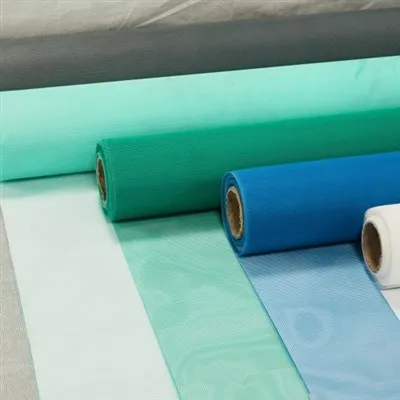
In building exterior wall insulation and crack prevention projects,fiberglass mesh is a key reinforcement material,and its selection directly affects the quality and durability of the project.However,faced with a dazzling array of brands,specifications,and related product information such as"mesh specifications"and"welded wire mesh,"purchasers often feel confused:What are the performance differences between different materials and processes?How can parameters determine whether a product meets the requirements of a specific project?Are price fluctuations due to quality differences or simply channel differences?Information asymmetry makes decision-making more complex.This article will outline the core selection logic to help you make informed choices in a complex market.
Key Selection Principles Overview When selecting fiberglass mesh,price or a single parameter should not be the only consideration.A comprehensive evaluation of the following three core aspects is crucial to finding a product that meets your project needs:materials and processes,specifications and mechanical properties,and applicable application scenarios and long-term reliability.These three points constitute a complete evaluation chain from basic product attributes to practical application value,and none can be omitted.
Key Points Explained One by One
Below,we will analyze the above three key points one by one:
Key Point 1:Materials and Processes The base material of fiberglass mesh is fiberglass,and its quality depends on the quality of the raw yarn,weaving process,and post-treatment.When purchasing,attention should be paid to fiber fineness(usually reflected indirectly by weight per unit area or basis weight),weaving uniformity,and the type of adhesive used.High-quality fiberglass raw yarn has high strength and good alkali resistance;uniform weaving ensures even stress distribution;alkali-resistant adhesives are key to coping with the alkaline environment of cement and ensuring long-term effectiveness.A simple visual inspection can check if the mesh surface is neat and free of broken fibers,but it is more necessary to refer to the material specifications and process instructions provided by the manufacturer.
Point Two:Specifications and Mechanical Properties.Mesh size(e.g.,10*10mm),width(e.g.,1 meter),and length directly affect the ease of construction and coverage efficiency.Mechanical properties are related to its reinforcement effect,including tensile strength and alkali retention rate.When purchasing,the required mechanical indicators for the project should be clearly defined,and product test reports should be verified.For load-bearing or high-stress areas,products with higher weight and strength should be selected.Higher parameters are not necessarily better;the key is to meet the requirements.
Point Three:Applicability and Long-Term Reliability.Fiberglass mesh tape is primarily used for wall reinforcement and crack prevention,but different substrates(cement,plaster)and environments(indoor,outdoor,high humidity)place varying requirements on the product's alkali resistance and weather resistance.When selecting a product,the specific project scenario must be considered,and the product's long-term performance stability must be evaluated.Whether the manufacturer provides clear application guidelines and whether the product has undergone long-term real-world testing are both standards for judging product reliability.To aid decision-making,the table below compares the priority of key configurations under different project requirement levels:Requirement Level,Typical Scenarios,Material and Process Priorities,Specification and Performance Priorities,Basic Crack Resistance Enhancement,Interior Gypsum Board Walls,General Plaster Layers,Standard Glass Fiber,Ordinary Alkali-Resistant Treatment
Standard mesh size(e.g.,10*10mm),Standard tensile strength
High-standard exterior wall insulation
Exterior wall insulation system finish layer,High humidity areas
High-strength glass fiber raw materials,Adhesives with excellent alkali resistance
May require smaller mesh size to enhance dispersion,High alkali retention rate(>90%)
Heavy-duty or special structures
Structural repair,Precast component connection
High-strength,high-toughness weaving process,can be composited with other materials
High basis weight(large area per unit weight),Extremely high tensile strength and impact strength indicators
Application matching and scenario selection
Applying these selection criteria to actual scenarios allows for clearer choices.For example,for exterior wall insulation plaster layers in ordinary residential buildings,the core requirements are alkali resistance and tensile strength to ensure long-term stable operation in the alkaline environment of cement.The mesh size needs to match the thickness of the plaster layer.For lightweight interior wall insulation,the mesh size also needs to match the thickness of the plaster layer.